



Planning to plant plants and not sure what conditions each plant likes? You are in the right place. In practice, many species are specific and require you to look after and treat them in a certain way.
The amount of substrate that the plant receives is one of the most important and at the same time the most often neglected elements of proper care. Most growth problems, weakening, yellowing, slow development or lack of flowering, do not come from lack of fertilizer or light, but from the limited space in which the root resides.
Substrate is the living space of the plant in which the root breathes, hydrates, expands, draws nutrients and maintains the stability of the entire plant. That's why it doesn't matter whether the plant has enough volume of substrate around it or just a few centimeters of soil in which it can barely manage.
Below is a detailed guide on how much substrate different types of plants need, what to consider when choosing a pot, and how to recognize when it's time to give your plant more substrate.
Why is the amount of substrate so important?
Before we get into specific amounts, it's important to understand what actually happens in the root zone.
The root must have room to breathe, expand and establish a stable system that supports the aerial part of the plant. When the substrate is not enough, the root begins to compact into circular formations, suffocate and lose the ability to properly absorb water.
Too little amount of substrate leads to faster drying, sudden moisture oscillations and weakening of plant tissue. Too much substrate, on the other hand, can lead to water stagnation and rotting.
In other words, the amount of substrate determines the rhythm of the plant's life. That is why it is important to have clear guidelines when choosing the volume of the pot and the required amount of substrate.
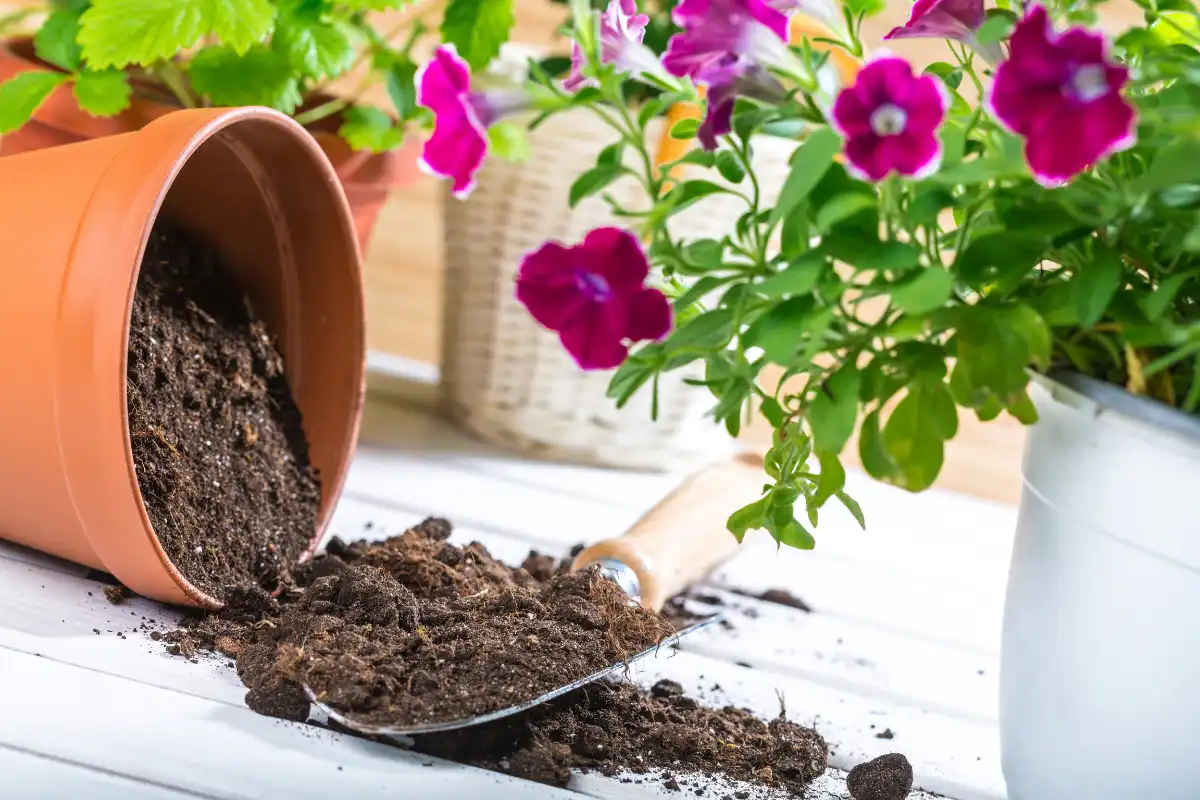
How much substrate do indoor plants need?
Indoor plants usually grow more slowly than garden plants, but that's why they need a stable environment in which the roots will not be hindered.
Most of these plants respond best to gradual increase in pot size by just a few centimeters, because an excessively large pot can retain water longer than the plant really likes.
On average:
- small indoor plants (up to 12 cm pots): 1–2 liters of substrate
- medium (12–20 cm pots): 4–7 liters
- large plants (20-30 cm pots): 10–15 liters
- tall groundcover plants: 20 liters and more
Please note, before transplanting a houseplant, always check that the root is visibly spreading at the bottom of the pot and that water passes quickly through the substrate. These are clear signs that she needs more space.
How much substrate do flower plants require?
Flower plants spend a lot of energy on the formation of buds and flowers, so their roots are especially active during the growing season.
Therefore, these plants require a substrate that is deep, stable and well-ventilated. On the other hand, an insufficient amount of substrate will quickly result in reduced flowering.
- smaller flowers: 2–4 liters of substrate
- medium-sized: 5–8 liters
- large flowering species: 10–20 liters
Flowering plants such as muscatli and petunia especially require a deeper layer of substrate, because their roots create a strong and dense system that supports abundant and long-lasting flowering.
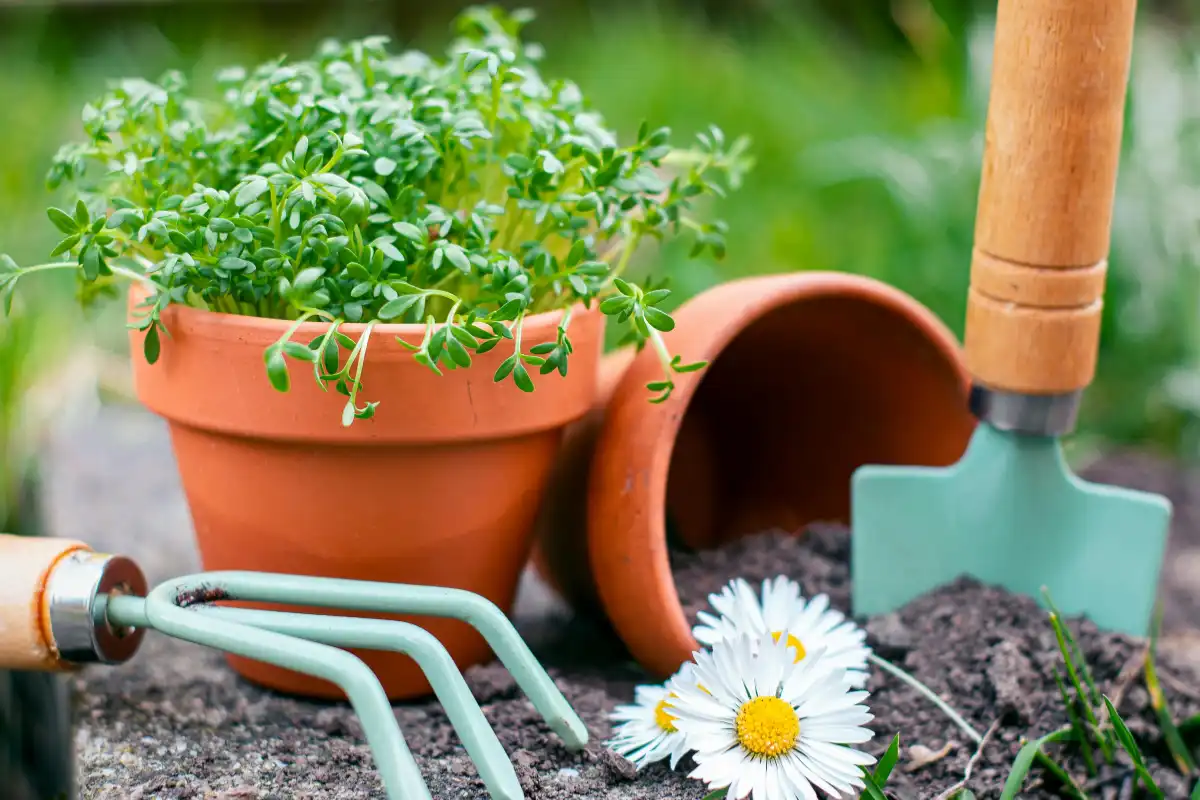
How much substrate do orchids need?
Unlike most plants, orchids do not like a classic substrate. Their roots are airy and require a specific mixture of bark, coconut chips and perlite, with a minimum of peat.
- standard phalaenopsis pots: 0.5–1.5 liters of substrate
- larger orchids: 2–3 liters
In case orchid, it is more important how the substrate is composed than how much there is. The mixture must remain light, airy and stable, so that the particles do not fall into the fine fraction that suffocates the root.
How much substrate do conifers need?
Conifers, even when potted, develop deep and strong roots. Therefore, they need more substrate than most other plants.
Also, conifers do not like moist, too long-soaked substrate, so it is important that the pot is deep enough and well-drained.
- small conifers: 3–6 liters
- medium: 10–15 liters
- large or dwarf conifers: 20–40 liters
We can say that the ideal substrate for conifers is one that combines good drainage, a stable structure and a slightly more acidic reaction.
Fast-growing plants
There are species that use up substrate space extremely quickly, such as monsteras, ivy, ferns, ficuses, pothos, all hanging and green plants.
Their roots spread strongly and evenly, so they need regular replacement of the pot.
- pots are increased every 9–12 months
- choose deeper containers with 30-50% components such as perlite, bark or coconut
- it is necessary to leave at least 3-4 cm of space around the roots
Keep in mind that if the plant stagnates, turns yellow or loses its leaves despite good care, the cause is often an insufficient amount of substrate.
How to estimate the amount of substrate without measuring in liters?
We believe that you have asked yourself the same question at least once. The good thing is that in practice, instead of complicated pouring of liters, there is a simple rule:
The root should occupy a maximum of 50–60% pots.
If the root fills the space too much, the plant has nowhere to grow and soon begins to show signs of stress. If the pot is too large, water will be retained in the non-root zones, leading to rot. This rule is simple, practical and universally applicable to most plants.
Keep in mind that the amount of substrate is not a technical detail, but the key to the good health of each plant. When the root has enough space, when the substrate is correctly selected and when the volume is adapted to the type of plant, we get strong, stable and long-lived specimens that respond properly to watering, bloom better and regenerate faster.
You can find it in our online store specialized substrates of different structures and granulation and additional components that will be an ideal ally in order to provide your plant with perfect conditions and just as much space as it really needs.
If you are not sure what quantity to choose, our team will be happy to help you estimate the ideal volume according to the type and size of the plant.
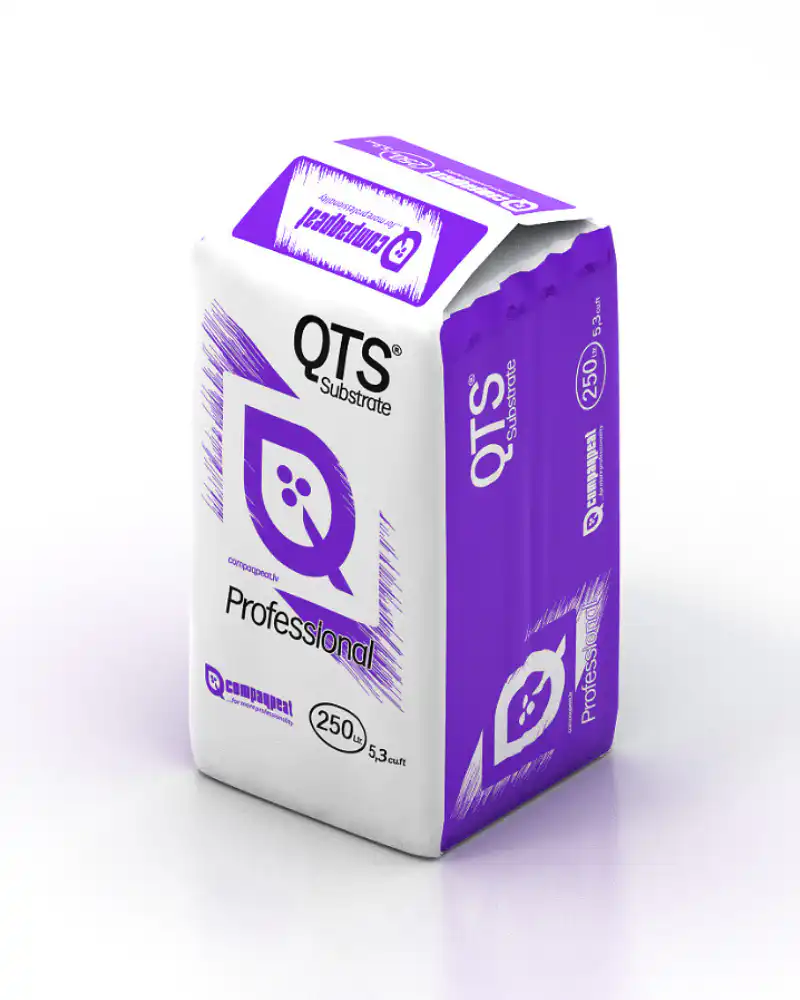
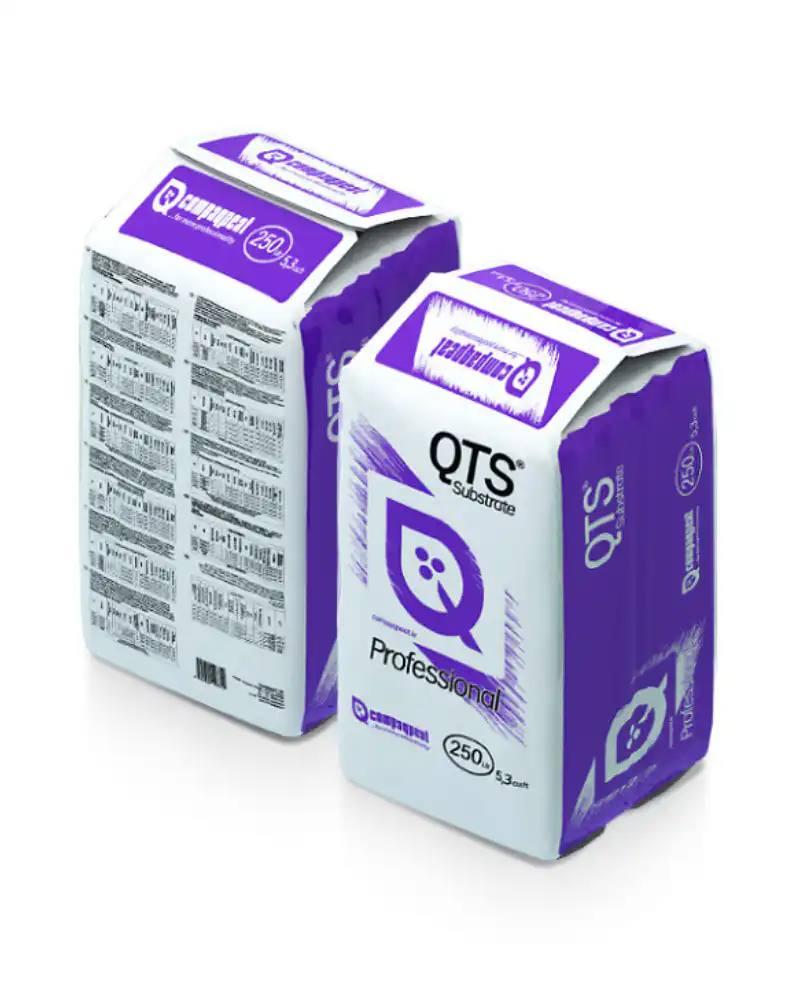
Price range: 3.351,00 RSD through 3.408,00 RSD

