


You could say the cyclamen is a bit upside down…
While other houseplants sleep in winter, it flowers. While we water others from above, we must water this one from below. And while we enjoy our philodendrons on the patio in summer, we must move the cyclamen to a cool place then and let it sleep.
That's why people who buy cyclamen for the first time often think they've died by May. All they've done is gone on holiday.
In this guide, we'll go step-by-step through everything we've learned from growing this plant and creating substrates for it since 1999. How to choose it at the florist, how to water it so it doesn't rot, which substrate it really needs (and how to make it yourself), and what to do when it starts to turn yellow in April.
What is a cyclamen and why do we love it?
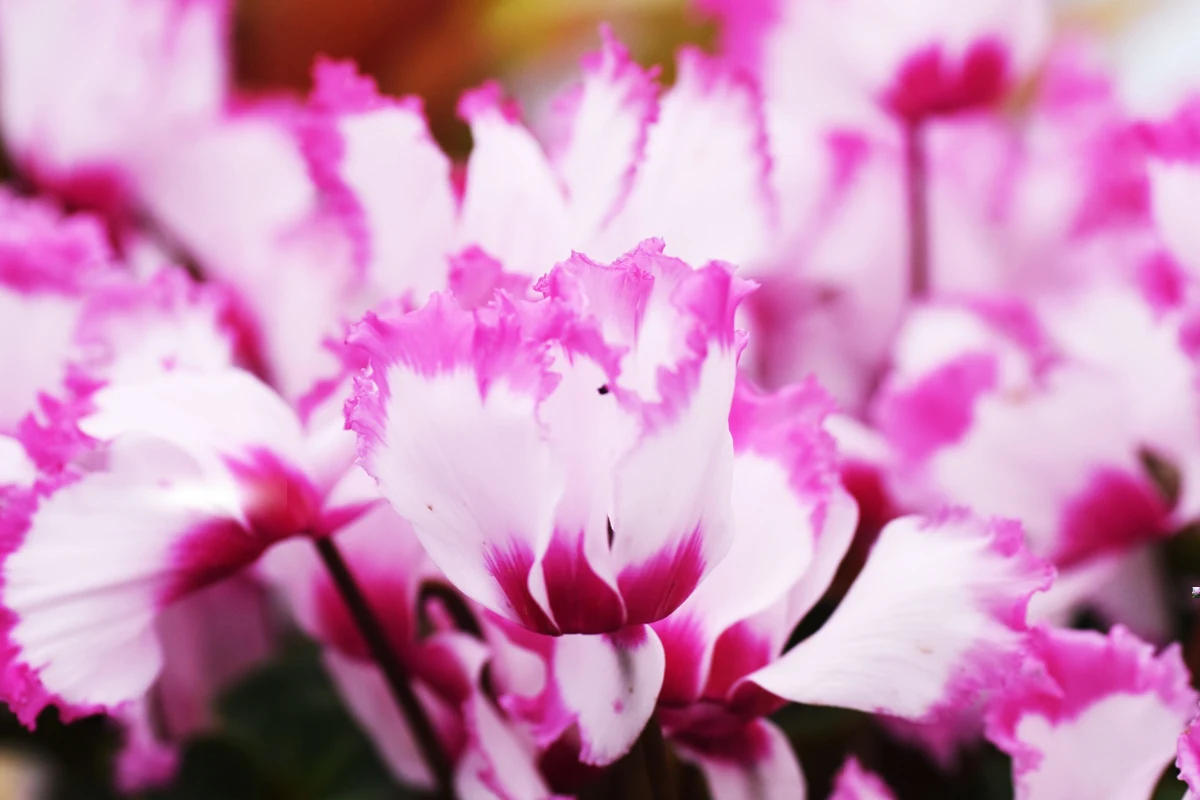
The proper name for a cyclamen is Cyclamen persicum, Persian cyclamen. The name is misleading as the plant does not originate from Persia, but from the Eastern Mediterranean. It grows there in shady, rocky areas of Greece, Turkey, and the Levant, where summers are dry and winters are mild and rainy.
That Mediterranean calendar explains all its habits. It rests when it's scorching hot and dry in its homeland, which is our summer. And it awakens and blooms when the rains start, which is our late autumn and winter. That's why in Serbia you see it in bloom from November to March, precisely when we most need colour in our homes.
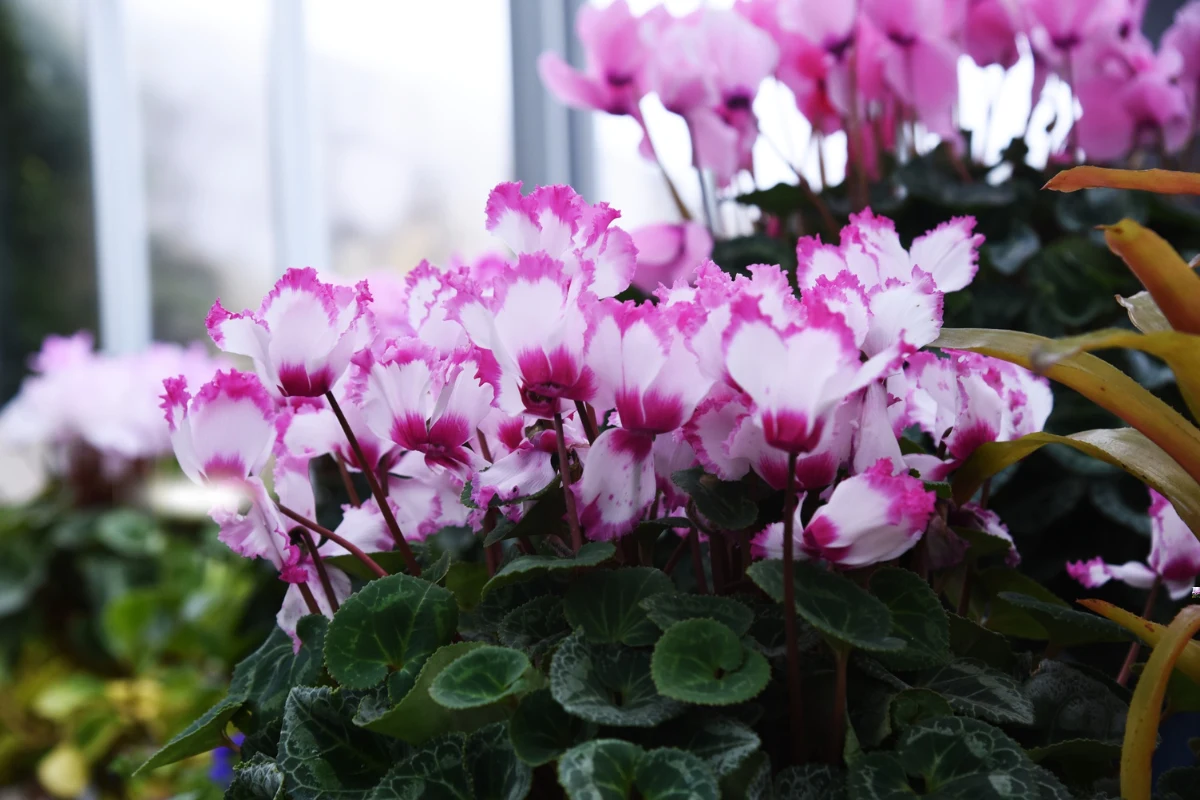
The cyclamen plants we buy today are not wild species but hybrids that Dutch breeders have developed over decades, with larger flowers and a longer season. Colours range from classic white through all shades of pink, lilac, purple and red, to variegated and bi-coloured varieties. In recent years, varieties with almost silvery leaves have also appeared, where the leaf is as beautiful as the flower.
What we adore it for isn't just aesthetic. One cyclamen in a twelve-centimetre pot can produce twenty, thirty flowers for you throughout the season. And all this while the Košava blows outside and everything is grey.
How to choose a cyclamen correctly when buying?
Most people skip this step. And if you buy a cyclamen that's already been started, even the best care won't save it.
Three things before you pay:
Leaves
They should be firm, slightly taut when you press them lightly, dark green with silvery markings. Drooping and limp leaves indicate a problem, most often that the tuber has already started to rot or the plant has been thirsty for too long.
Tuber
This is the round, brown tuber in the centre of the plant from which all the stems emerge. On a healthy cyclamen, about a third of the tuber should be visible above the substrate. Gently touch it with your finger. It should be firm like a small potato. If it gives way under your finger, if it's soft or slimy, leave the pot where it is.
Handles
They should be firm, upright, and densely spaced. If they are elongated, thin, and bend to the side, the plant has been grown with too little light, and it will be difficult for you to get it back into shape.
And one small thing that few people look at. The best cyclamen to buy is not the one in full bloom with twenty flowers open. That one is probably at the end of its cycle. It's better to look for one with a few open flowers and a bunch of closed buds rising from beneath the leaves. One like that will flower for months.
Ideal conditions for cyclamen
Temperature
Herein lies the main problem. Cyclamen like it cool. Ideally between 10 and 17 degrees Celsius. Our flats in winter are 22, 23, sometimes even 25 degrees. For a cyclamen, this is summer, and summer for it means it's time to sleep, not to bloom.
The consequence is a short flowering period. Instead of the whole winter, you get three or four weeks. The blossoms fall quickly, the leaves turn yellow, and by January, you already have a bare tuber.
The worst place for a cyclamen is a shelf above a radiator or a living room table. The best places are an unheated hallway, an unheated terrace that's around 12 degrees Celsius in winter, and a bedroom window that's frequently aired. Our customers often keep them in the building's stairwell or on a closed balcony, and the plants last them until March. Just be careful not to let it drop below zero, frost is fatal to it.
Light
Plenty of light, but no direct sun. In nature, it grows under canopies, meaning it receives diffused, indirect light. In a flat, this means an east or north-facing window. West can work if the sun doesn't hit the leaves directly. South is problematic because afternoon sun through glass in winter can raise the temperature around the plant too much, scorching the flowers.
If you notice the leaves and flowers are all leaning to one side, gently turn the pot a quarter turn each week.
Air humidity
The biggest problem for all houseplants in Serbia during winter. When central heating starts, the humidity in the flat drops below 30 percent, desert conditions. Cyclamen would like somewhere between 50 and 60.
Do not spray it with water from a spray bottle. Water on the flowers and leaves will leave spots and encourage grey mould, especially if it collects in the plant's crown around the tubers.
Instead, place the pot on a larger tray filled with gravel or expanded clay (those round brown drainage pellets), and add water to the tray so that it does not touch the bottom of the pot. The water evaporates around the plant and increases local humidity. Another option is to group houseplants; three or four pots together create their own microclimate. The third, most effective, is a room humidifier.
How to water a cyclamen?
This is where it's decided whether your cyclamen will live or die. Nine out of ten cyclamens that people kill, they kill by watering them incorrectly.
The Cyclamen is watered from below. The reason for this is its anatomy. That tuber in the centre of the pot is essentially a water store, with a hollow on top from which the stalks grow. When you pour water from above, it flows into this hollow and stays there. The tuber starts to rot, the rot spreads for a few days, the plant wilts, and by the time you notice it, there's nothing left to save.
This is how we do it. We take a deeper saucer or dish, pour in room-temperature water, and place the pot into it. We leave it like that for 15 to 20 minutes. During this time, the substrate absorbs water through the drainage holes from below and becomes uniformly moist. After 20 minutes, we lift the pot, pour out the excess water from the saucer (this is important, we don't leave it standing in water), and return it to its place.
How often depends on the temperature and pot size, approximately once every five to seven days. The best method for checking is the finger test. Push it into the substrate two to three centimetres deep. If it's dry, water it. If it's damp, wait another day or two.
The water must be at room temperature, never cold from the tap. If the water from your mains is very hard, which is the case in most cities in Serbia, leave it overnight in an open container to allow the chlorine to evaporate.
How to recognise overwatering: The leaves are yellow and limp, the tuber is softening, the lower leaves are decaying faster than the flowers, and a musty smell comes from the substrate.
How to identify dampness: The leaves are drooping but not yellowing, the substrate has pulled away from the edges of the pot, the plant looks withered but recovers quickly after watering.
Remember one rule. Cyclamen forgives drought more easily than overwatering. It's better to be a bit stingy with water than a bit generous.
What substrate do cyclamen need and how to make it yourself?
In flower shops, the plant is usually in an industrial mix adapted for mass production, not for long-term life in your flat. After a few months, this substrate compacts, loses its structure, and water starts to either accumulate or conversely, drain straight through without moistening. That's where the problems begin.
Cyclamen requires a substrate that is simultaneously three seemingly contradictory things. Light and airy so the roots can breathe. Capable of retaining moisture, but only just enough. And slightly acidic, as cyclamen do not like neutral or alkaline substrates. Ideally between pH 5.5 and 6.5.
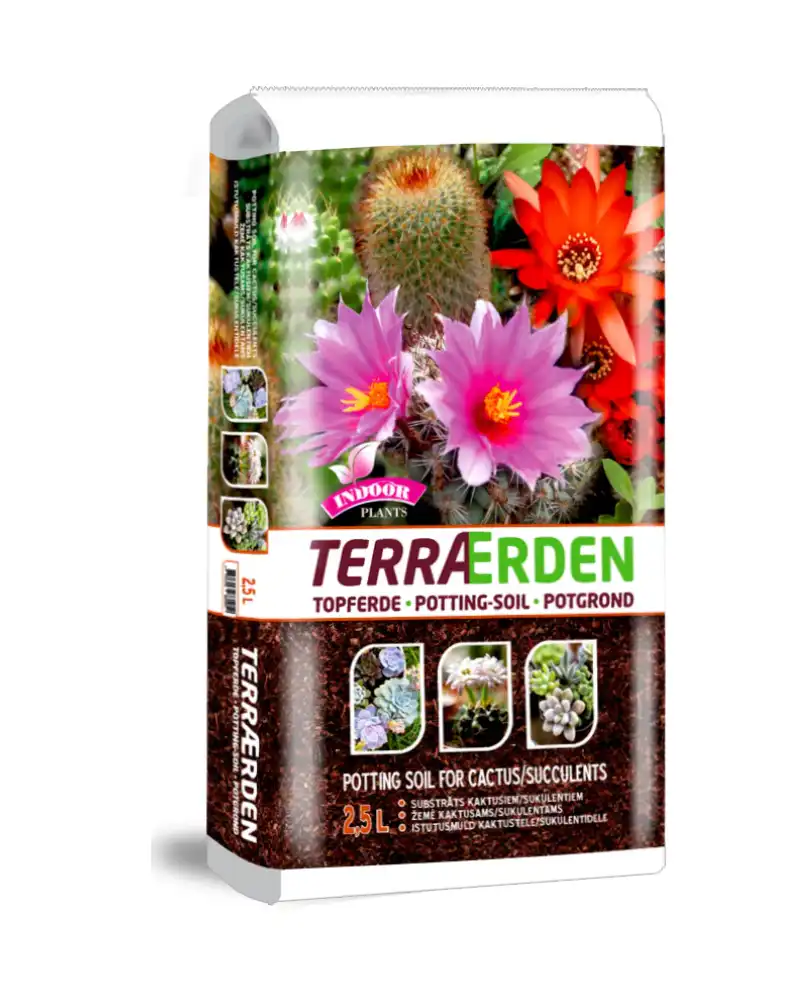
Universal compost from the shop rarely meets these three conditions. It is often too heavy, with plenty of clay or composted material that quickly compacts, and its pH is around 7 or higher.
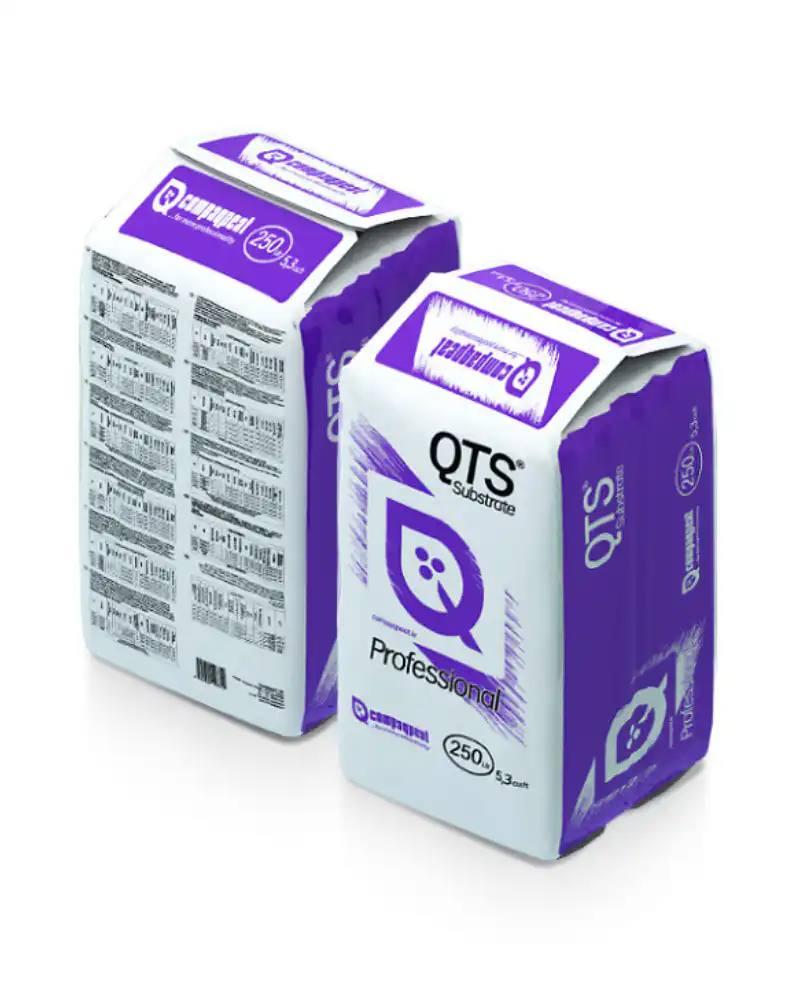
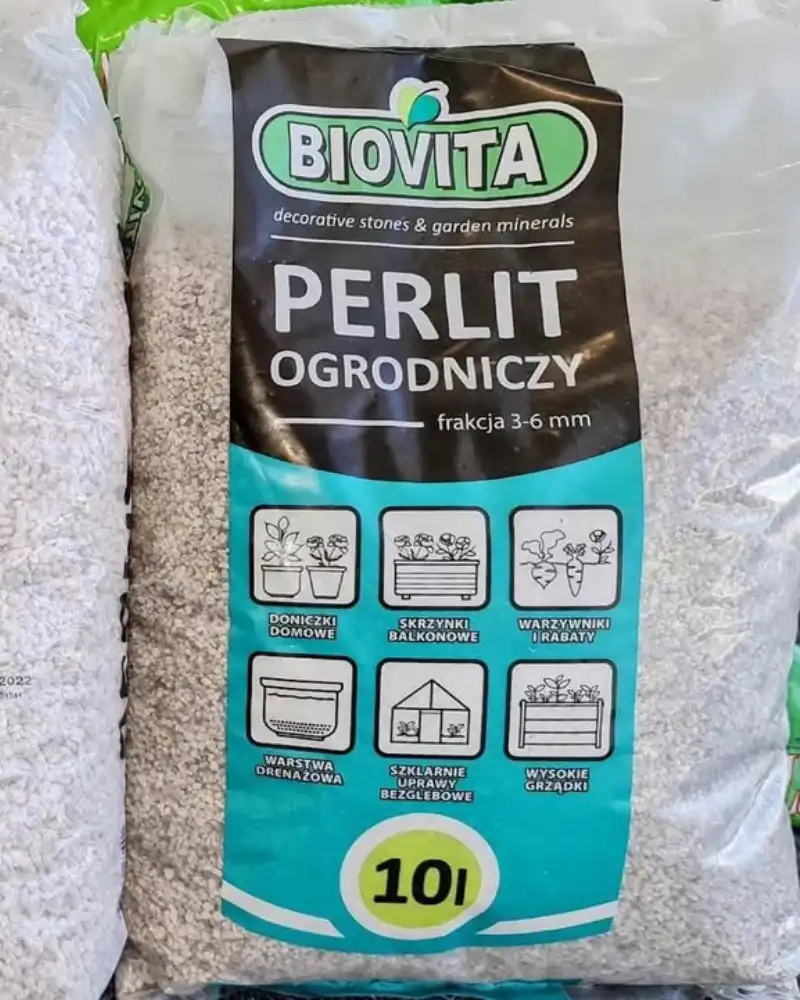
The blend we've been recommending to our customers for decades is simple. Sixty per cent acidic peat, thirty per cent worm castings, ten per cent perlite.
Light acid peat It is peat. It provides the slightly acidic pH that cyclamens need and has a fibrous structure that retains moisture but does not allow the substrate to become waterlogged.
Glistenjak It's food. It's actually sifted Californian earthworm faeces, the richest natural source of microorganisms and slow-release nutrients. Thirty percent in the mix means that for the first few months the cyclamen has everything it needs without additional fertilisation.
Perlite It is for drainage and aeration. These are the white granular balls you see in quality substrates. They create air pockets within the mix and prevent the substrate from compacting and leaving the roots without oxygen.
Mix all three components by hand in a clean bucket or plastic container. For a 14 cm pot, about six handfuls of peat, three handfuls of worm castings and one of perlite will suffice. Do not compact the mixture; on the contrary, the airier the better.
If you are interested in why drainage is so important and what types of drainage layers exist, We wrote a special text about it. And for those who want to better understand pH and how it affects all houseplants, not just cyclamen, here's our Guide to pH substrate structure.
Cyclamen fertilising
The cyclamen is not a greedy plant. If you've planted it in a good mix with worm castings, you won't need to fertilise it at all for the first two to three months.
When active flowering begins, around December, start using liquid fertiliser for flowering plants. Look for one with a higher potassium content; the third letter K on the bottle should be larger than the first two. Potassium directly feeds the flowers and prolongs flowering.
Dilute to half the recommended strength. Cyclamen are sensitive, too strong a concentration will scorch the root tips. Fertilise once every 14 days, always on a moist substrate (never on a dry one, again due to scorching the roots), and do this by adding the fertiliser to the watering can from below.
Fertilising should cease at the moment the first signs of the season's end appear. March, April, when the flowers bloom less frequently and the leaves begin to turn yellow, one by one.
Dormancy period
The biggest mystery surrounding cyclamen, the part that confuses people the most.
In April, or possibly May, your cyclamen, which until recently was beautiful, will start to show signs of decline. There are no more flowers. The leaves yellow, one by one, and dry on their stems. After a month, you will have a tuber in the pot and some dried remains.
Most people think the plant has died and throw it away. Mistake. The cyclamen is alive, it's just fast asleep. If you give it a chance, it will wake up again in the autumn and bloom for you next winter, and the one after that, and the one after that.
We have customers coming in for new substrate for a plant they've had longer than their dog. Specifically, the process goes like this.
April and May
As the leaves turn yellow, gradually reduce watering. Not abruptly, but gradually. Instead of every seven days, water every ten, then fifteen. Carefully pluck off dried leaves (don't pull them, gently twist and they will fall off on their own). Stop fertilising completely.
June, July, August
When all the leaves have fallen and you are left with only the tuber in a dry substrate, the plant is dormant. Move the pot to a cool, semi-shady location. Ideally, a place that is around 15 degrees Celsius in the summer, which is not easy for us in Serbia as our summers are very hot. A cellar, a storage room in the north of the house, a hallway that does not get direct sunlight, a shelf in the garage. The worst is a south-facing terrace where the tuber will get fried. Do not water at all, or water minimally once a month, just enough so that the substrate does not become completely powdered.
Late August, early September
Waking. Move the pot to a brighter spot, give it a good watering from below, and wait. If the tuber is healthy, you'll see the first small leaves peeking through in two to three weeks.
This is also a good time for repotting, if you think it's necessary. Take the tuber out of its old pot, shake off the old substrate, and check if it's firm and healthy. Prepare a new pot, only slightly larger than the old one. At the bottom, add a drainage layer of two to three centimetres (small gravel or expanded clay), then a mixture of peat, worm castings, and perlite. Plant the tuber so that the top third sticks out above the substrate. This is crucial; if you bury the entire tuber, water will accumulate in its crown, and rot will set in as soon as you start watering regularly.
From September to November the plant grows, makes new leaves, and at the end of November or beginning of December you get the first flowers to appear. The second season has begun.
Common problems and solutions
Yellow leaves: The most common symptom, the most causes. In March and April, it's a normal entry into dormancy. In the middle of the season (December, January) it means something is wrong, most often the temperature is too high and the plant thinks it's summer. Another reason is overwatering, a third is lack of light. Move to a cooler and brighter place, reduce water, carefully remove yellow leaves by twisting them to the side.
Rot and mould: The most serious problem. If you have watered from above and the tuber is now softening, carefully remove it, wash it under a stream of lukewarm water, cut off all soft brown parts with a sharp clean knife until you reach healthy white tissue. Sprinkle the cuts with activated charcoal powder, leave the tuber to air dry for 24 hours, then plant it in fresh dry substrate. Do not water for the next three to four days. Rescues are successful in perhaps half of the cases, but it's worth trying. Better half a chance than none.
Elongated flower stalks: The tanks, leaves are bending and cannot lift the flower. The reason is lack of light. Move the plant closer to the window. The old stems will not recover, but the new ones that start after moving will be normal.
Dust mites and ticks: Your small green aphids are on the underside of the leaves, treated with potassium soap or neem oil (leaves only, not the crown around the tubers). Spider mites are almost invisible reddish dots with fine webbing between the leaves, occurring in dry air, increasing humidity is the main measure.
The flowers are falling quickly. If a flower only lasts three or four days instead of two weeks, your flat is too warm. Move the cyclamen to a cooler room, even if only overnight.
Indoor and garden cyclamen
Indoor cyclamenCyclamen persicumis tropical and does not survive winter outdoors in Serbia. A couple of frosts are enough for it to freeze the tuber.
But there are also garden cyclamen, a completely different story. Cyclamen hederifolium (Ivy-leaved cyclamen) and Cyclamen coum sown to their smaller and more durable relatives, which you can freely plant in the garden under trees or in a rock garden. They bloom with smaller flowers, but over the years they multiply and create entire carpets. Come late winter flowers, hederifolium in the autumn. If you see a cyclamen outside in a park or someone's garden, it's almost certainly one of these two.
Can a cyclamen be put outside? During spring and autumn it can be placed on a shaded terrace, it's even beneficial for it. Not in the summer, summer in Serbia is too hot. Indoors in winter, without exception.
Is the cyclamen poisonous to pets?
Yes. The tuber contains saponins, compounds that are irritating and toxic in larger quantities. It is dangerous for dogs, cats, and children. The ASPCA is list of poisonous plants for pets.
Symptoms of poisoning range from vomiting and excessive salivation to more serious heart rhythm problems. If you suspect your pet has eaten cyclamen, go to the vet without delay.
Practically, keep cyclamen on high shelves out of reach of cats and children. Wear gloves when repotting; the sap from the corms can cause skin irritation in more sensitive individuals.
Three things to remember, if nothing else from this text. Cool place, water from below, tuber one-third above substrate. If you follow this, your cyclamen will bloom every winter for the next ten years.
If you are considering making your own substrate mix, you can order all the ingredients (acidic peat, worm castings, and perlite) directly from us. We have been producing them in Sremska Mitrovica since 1999, and these are the same components we use ourselves for the plants we grow.