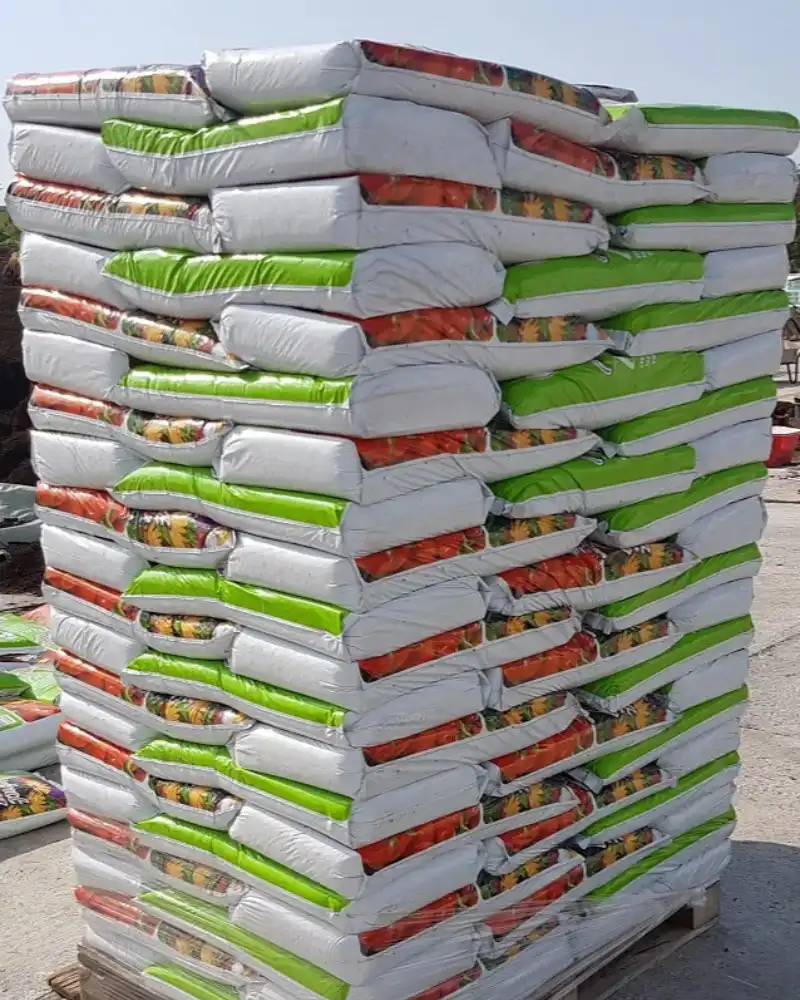



There's an old joke among florists in Serbia that the crassula (money tree) doesn't belong to the owner, but rather She owns it. The reason is prosaic: you will grow old before it does. A healthy jade plant in good soil outlives dogs, cats, and is often passed down from grandmother to granddaughter as a family heirloom.
Fewer than a fifth of plants sold in florists reach that bequeathed status. The rest die within the first year or two. Almost always from the same mistake, which looks like care but is essentially drowning.
In this guide, we will go step-by-step through everything we've learned about growing succulents and making substrates for them since 1999. How not to kill it in the first year, how to propagate it into ten new plants, what substrate it really needs and how to make it yourself, and what to do when its leaves start to fall off in March.
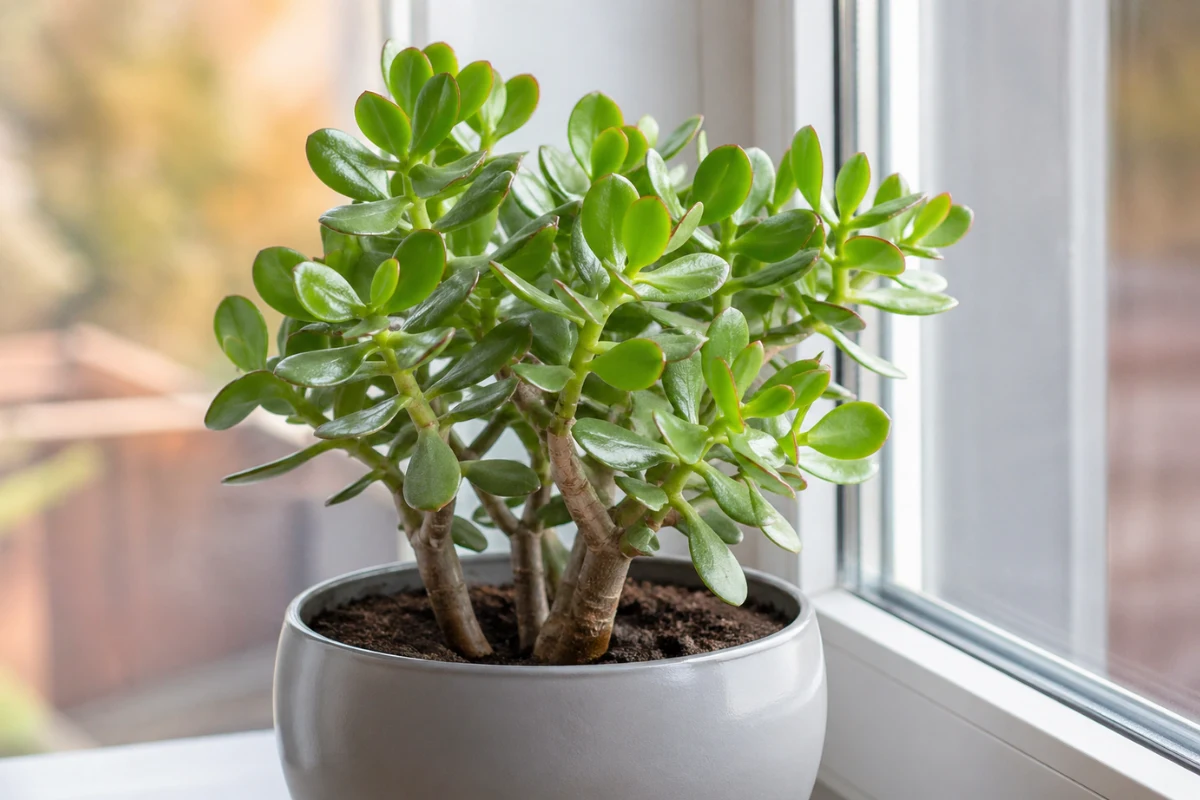
Crassula, money tree, money tree, jade tree: why is it all the same plant?
Its Latin name is Crassula ovata. Latin Crassula meaning „fat“, broad meaning „ovate“. Everything else are common names that are used interchangeably and refer to the exact same plant.
Money tree and money plant They come from the Feng Shui tradition, where the jade plant has been kept for centuries as a prosperity-attracting plant. Its leaves resemble small coins, which has likely reinforced the association.
Jade plant je the English name used here for more expensive, decorative varieties. The young, shiny leaves are reminiscent of the semi-precious stone jade.
Japanese money tree This is a marketing name introduced by nurseries, even though the plant doesn't originate from Japan at all but from South Africa.
The Tree of Friendship and Pence are local names that have been preserved in northern Vojvodina and parts of Srem.
The only mistake to avoid. The money plant is not tree of life. Under this name, yucca is sold in our country (Yucca), and in the gardens there are thuja (Thuja). If someone tells you they „have a tree of life“, they are probably talking about something else entirely. You'd better ask what colour the flower is and what the leaves look like.
Where does it come from and why is it key to care?
Krasula grows wild in the Eastern Cape and KwaZulu-Natal provinces of South Africa. The environment there is rocky, the sun is relentless, and rain falls a few times a year, heavily and all at once, after which everything dries up again.
The earth it grows in is more sand than organic matter, with minimal nutrients. The plant has adapted by transforming its leaves into reservoirs. Each thick, fleshy leaf is essentially a physiological water balloon that the succulent stores for the dry months.
This is important to know because every mistake in care is practically a deviation from those conditions. We treat it like a fern, but it's a desert plant that carries enough water within itself for several weeks. Most problems with krašula in Serbian apartments can be explained in one sentence: people give it too much love.
How to recognise a true Crassula ovata?
In flower shops, several different crassulas are often sold under the same name. The difference is not significant in terms of care, but it is useful to know which one you have.
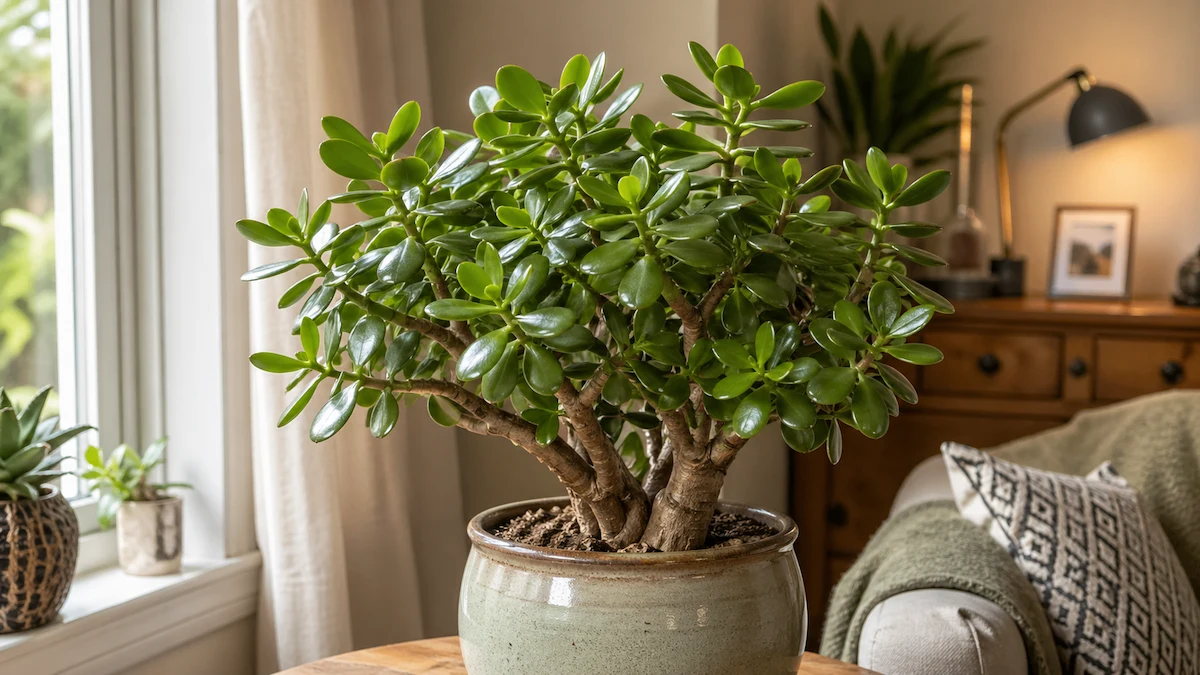
Classic Crassula ovata It has smooth, shiny, oval leaves that are dark green and 3 to 5 cm long. When the plant gets enough sun, the edges of the leaves turn reddish, almost as if someone has painted the outer edge. This is a good sign, not a bad one.
‘Hobbit’ It has strange, tubular leaves that look like small green horns with an indentation at the top. It grows more slowly and remains more compact, making it a favourite for bonsai forms.
‘Gollum’ It's similar to the Hobbit, but the needles are even narrower and more elongated, with red tips. It resembles a stylised fir branch.
‘Hummel's Sunset’ It has yellow stripes on green leaves, with red edges. It requires more sun to maintain those colours.
‘Variegata’ It has cream-white stripes on green. The most sensitive of all, it requires the most light and scorches most easily in the sun.
They are all cared for in exactly the same way. They differ in appearance, not in needs.
The stem is initially green and soft, becoming woody and thickening over time. In plants aged 10 years and older, the stem resembles a small trunk, complete with bark. This is why jade plants are so often trained as bonsai. We have a 17-year-old specimen in our production area; it has grown over a metre tall and is as thick as a fist.
Ideal conditions: how much light, what temperature
Light
This is where the most mistakes are made, and this is where it's decided whether you'll have a healthy petunia or a stretched, weak plant skeleton.
A jade plant is not for dark hallways, living rooms far from windows, or rooms that are not aired out. It needs at least 4 to 6 hours of direct or very strong light Daily.
In Serbian flats, the ranking of positions goes like this:
- South and southwest windowIdeally, the leaves will be firm and have red edges
- East windowIt's fine, the plant is growing healthily but without any red accents.
- Western windowIt passes, but watch out for the afternoon summer sun through the glass.
- North windowThe crassula will survive, but it will stretch out and lose its shape
The spaces between the leaves start to increase, the stems become longer and thinner, and the plant seems to „stretch“ towards the window. This is called etiolation and it is not reversible. You can prune that elongated branch (make a new plant from it, we'll talk about that later), but you won't be able to return it to its compact form.
One important note. If a jade plant has been in semi-shade for a long time and you suddenly put it in full sun in July, the leaves can scorch. Give it 7 to 10 days to gradually get used to it, keeping it in the shade for the first couple of days, then slowly moving it to a brighter spot.
Temperature
The ideal temperature range for flowering is 18 to 24 degrees. In winter, it prefers cooler temperatures, around 10 to 15 degrees. This slightly cooler period isn't just tolerable; the plant needs it in order to flower the following year.
It should not be below 5 degrees and definitely not frost, the root tuber will freeze and the plant will die.
What it dislikes: draughts, sudden temperature changes, standing directly above a radiator. If this happens, the first symptom is a sudden loss of leaves within a few days.
Air humidity
This is good news. Succulents prefer dry air, which is the opposite of most houseplants. A flat with central heating in winter suits it well. You don't need to spray it with water, you don't need to place a humidifier next to it, and you don't need to group it with other plants for a microclimate. Everything you do for monsteras and calatheas doesn't apply here.
If you keep both the *Kalanchoe* and the *Calathea* in the same place, one of those two plants will be unhappy.
Watering a jade plant: why every third one dies and how to ensure yours isn't the third
Let's put it bluntly. Nine out of ten fuchsias we see have died from overwatering. Not from being forgotten, not from drought. From water.
A typical scenario looks like this. You buy a crassula from a florist, bring it home, and place it on a chest of drawers. For the first few days, you watch it cautiously, not touching it. After seven days, you think, „it's probably thirsty,“ and water it. Five days later, it seems dry on top again, so you water it. And so it goes in a circle. After two months, the plant starts to lean over, and the leaves fall off. You discover that the stem at the bottom is black and slimy. The roots have rotted.
The crassula is no ordinary houseplant. It's a water tank on legs. Each thick leaf holds enough water within it for one to two weeks of drought. If you water it before it has used up the first supply, it has nowhere to store it, so the water gathers around the roots. The roots don't breathe, and they begin to rot.
Watering rule
Pour only when the substrate is completely dry to a depth of 5 to 7 cm. Not half dry. Not „maybe it's dried out“. Completely dry.
The easiest test is your finger. Stick it into the soil up to the second knuckle. If you feel moisture, don't water. If it's completely dry, you can.
If you don't want to get your hands dirty, a wooden barbecue skewer does the same job. Stick it in the bottom of the pot, pull it out, and if the soil isn't sticking to the skewer and comes out dry, it's time for water.
A practical rhythm in a Serbian flat
These numbers are a guideline, not a rule. It really depends on the size of the pot, the position of the window, and the temperature of the flat.
Summer (June, July, August): every 14 to 21 days Spring and Autumn: Every three to four weeks Winter (December, January, February): Once a month, sometimes less often
A jade plant in a plastic pot on a cooler north-facing window in winter can go five or six weeks without watering and remain perfectly healthy. A jade plant in a terracotta pot on a south-facing window above a radiator may require watering every three weeks in winter.
How to water correctly?
It's not just about when, it's also about how.
Pour water slowly over the entire surface of the substrate until it starts to drain through the holes at the bottom of the pot. Leave the pot in its saucer for five to ten minutes, then Empty excess water from the saucer. This last point is important. If the pot remains standing in water, we're back to the story of rotten roots.
Let the water be at room temperature. Cold water straight from the tap in winter is an added stress for the plant.
If you have decorative stones on top of the soil, don't rely on what you see from above. Stones can be deceiving. It might look dry while the soil underneath is still damp. Always check with your finger through the stones, or by lifting the pot (a light pot means dry soil, a heavy one means damp).
How to recognise overwatering?
Leaves turn yellow and become limp, dropping at the slightest touch, the stem at the base is soft and dark, and a musty smell can be detected from the substrate. If you notice these symptoms, urgently remove the plant from the pot, shake off the old substrate, cut off rotten root parts, and repot into completely fresh, dry substrate.
How to recognise thirst (rare, but it happens)
The leaves crease like empty bags, they are soft, not limp, the plant looks „drained“. A Crassula that has been forgotten for three months in a dry pot usually recovers after a good watering within 24 hours.
The rule you remember. The succulent tolerates drought better than overwatering. Better to forget for seven days than worry for three.
What substrate should a jade plant have (and why ordinary soil isn't the solution)
This is the point where the decision is made. You can do everything else perfectly, but if you plant it in ordinary universal potting compost from a bag that says „for all houseplants“, the jade plant will eventually start to rot.
The reason lies in the design of universal substrates. They are made to retain moisture, as most houseplants like this. Crassula does not. Crassula needs soil that drains like a sieve, where water lingers just enough for the roots to drink, and then disappears.
The second thing is pH. Crassula grows best in a slightly acidic to neutral substrate, ideally between pH 6.0 and 6.5. Universal mixtures often have a pH of 7 or higher, which over time leads to the plant being unable to absorb part of the nutrients from the soil.
The recipe that we also use ourselves for our succulents
50% light acid peatbase of the mix. It provides structure, a light pH that succulents love, and retains just the right amount of moisture for the roots.
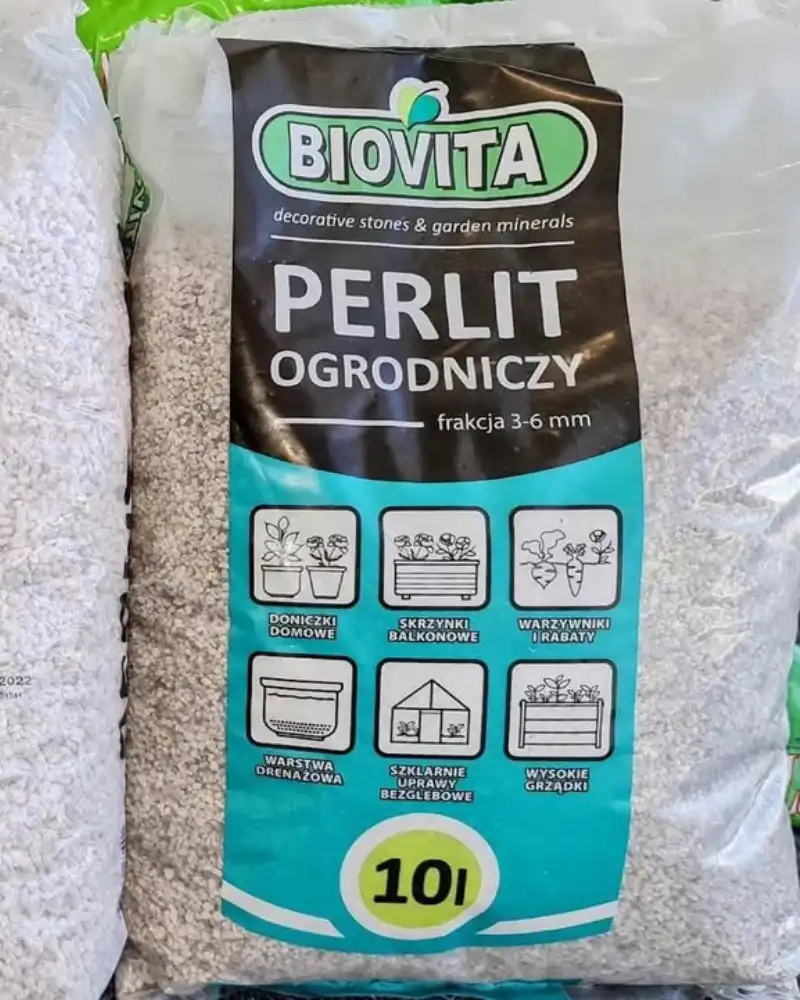
30% agro perlitewhite granular balls that create air pockets within the mix. This is perhaps the most important ingredient, as perlite physically prevents the substrate from compacting and becoming oxygen-deprived around the roots.
20% coarse sand or fine granulesadditional drainage and the physical weight that keeps the pot stable (crassula likes deep pots, it becomes top-heavy over time and can tip over).
Mix all three components by hand in a plastic bucket. For a 14 cm pot, about five handfuls of peat, three handfuls of perlite and two handfuls of sand are sufficient. Do not compact the mixture; the airier the better.
If you don't want to mix...
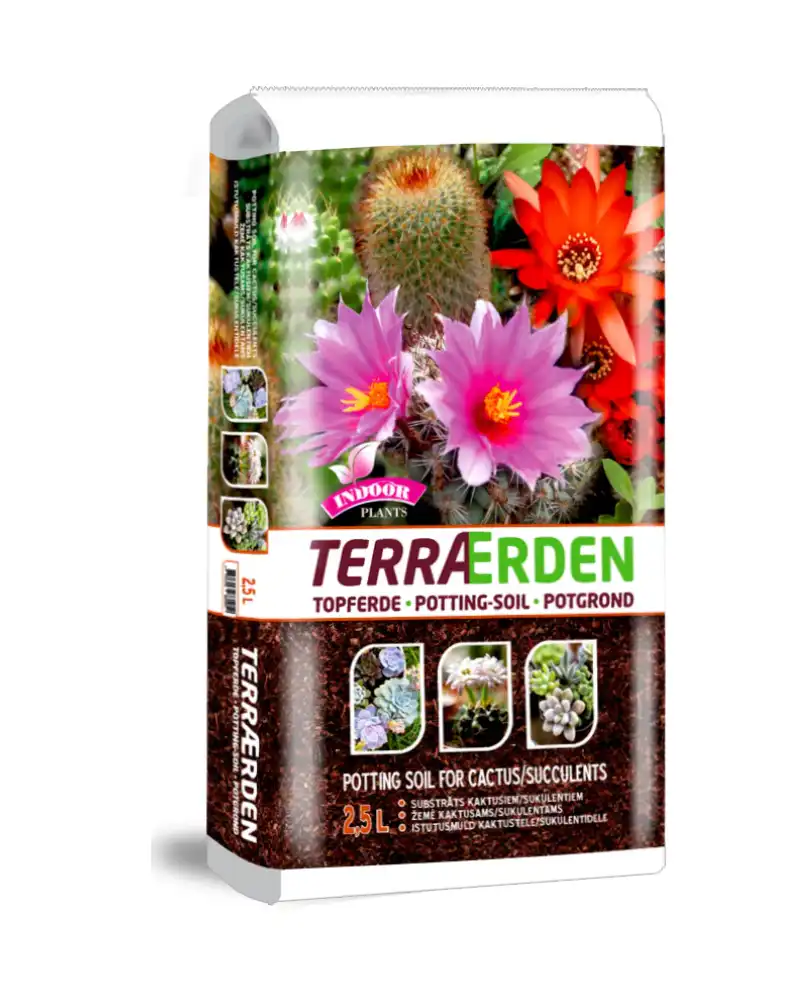
We have ready Cactus compost which is already balanced for succulents. A 2.5-litre pack is enough for one or two smaller pots, which is usually just right for an average household.
The flowerpot is part of the story
Without holes in the bottom of the pot, the best soil in the world won't help you. Water needs to escape somewhere. If you've fallen for a decorative pot without holes, plant your specimen in a regular plastic pot with holes, and then place that plastic pot inside the decorative one, like a spoon. This way, you can lift out the plastic one, pour away excess water from the decorative pot, and put it back.
Terracotta plant pots are better than plastic ones. Clay is porous, drawing moisture through the walls and helping the substrate to dry evenly. Plastic seals everything in. If your soil in a plastic pot takes too long to dry, you now know why.
We've written a separate text about the drainage layer in a plant pot and its best options, Look here.
Fertilising: the jade plant isn't greedy
In nature, crassula grows in mineral-poor soil, accustomed to fending for itself. In a flat, it needs minimal fertiliser.
During active growth, from April to September, give it Liquid fertiliser for succulents and cacti once a month. Diluted to half or a quarter of the strength indicated on the bottle. The reason for diluting is that commercial fertilisers are generally calibrated for fast-growing plants, and the jade plant is not.
Do not fertilise the plants at all in winter. The plant is dormant, fertiliser will accumulate in the substrate and can burn the roots.
A sign that you've overdone it with the fertiliser is a white powder or crust on the surface of the substrate. If this happens, flush the soil with soft water a few times and pause fertilising for a couple of months.
Repotting a jade plant: when, why and how
The Crassula doesn't like to be repotted too often. This is one of the things that sets it apart from most houseplants. Most ferns and monsteras are happy with a larger pot every year. The Crassula likes to be snug in its pot.
Young plants (under 5 years, less than 30 cm): into a new pot every 2 to 3 years.
Mature plantsevery 4 to 5 years, or only when it becomes too big so its pot tips over, or when you see roots peeking through the drainage holes.
The best time is spring, April or May, when the plant begins active growth.
Procedure
- Prepare a pot just a little bigger than the old one., maximum 2 cm in diameter. A large pot with a lot of soil means a lot of retained water, which leads to rot.
- At the bottom of the pot, add a layer of coarse drainage from 1 to 2 cm. Small gravel, clay pebbles (those round brown balls for drainage), or pieces of broken terracotta can be used.
- Carefully remove the plant from its old pot. If it doesn't come out easily, run the blunt side of a knife around the edge of the pot.
- Brush off the old substrate from the roots. You don't have to remove all of it, just what comes off easily. Examine the roots. Healthy roots are white to light brown in colour and firm. If you see black, soft, slimy parts, that is rot. Using sharp, clean scissors, cut away all rotted parts until you reach healthy tissue.
- Plant in fresh, dry substrate. Don't pack the soil too tightly, just lightly pat around the roots.
- Do not water for 5 to 7 days. Allow the roots to heal, especially if you've cut away rotten parts. Only water for the first time after a week.
This last step is where people go wrong. A newly repotted plant watered immediately is almost guaranteed to rot, as the roots are newly opened and vulnerable.
How to propagate a jade plant: three methods and which works best
This is where the jade plant really shines and one of the reasons why it's so popular. You can make ten, twenty new plants from one plant, almost effortlessly. And it's literally free.
Leaf propagation: easiest for beginners
What's great about this method is that one leaf gives you a whole new plant. Literally, a leaf just comes off on its own and falls to the ground, and after a few weeks, a new shoot starts.
Procedure:
Choose a healthy, fleshy, thick leaf. Do not take brittle or old leaves from the bottom, they are already losing water. Don't cut with scissors, grab the leaf with your fingers at the base, rotate it gently left-right, and it will snap off cleanly, with a small „button“ at the base. That button is what the root grows from; if that button is halved when you remove the leaf, it won't be able to grow roots.
Leave the leaf in a dry place for 2 to 3 days the fracture site does not form a callous, a thin scab, like when you cut your finger and it forms a crust. This step is crucial. If you skip it and immediately put the fresh leaf in a moist substrate, the leaf will rot before it has a chance to root.
Place the leaf on a damp (not wet) succulent substrate. Do not bury him, just lay them down. The handles are thin and fragile, if you try to stick them into the ground you will break them.
Keep in a bright place, but not in direct sunlight.
What will happen:
- 2 to 3 weeksThe first roots emerge from the break point and enter the substrate.
- 4 to 6 weekstiny leaves of the new plant are starting to appear
- 3 to 4 monthsThe old leaf begins to shrivel and fall off, as it has used all its energy to create a new plant.
- 6 to 12 monthsDo you have a normal little daisy
Propagation by cutting: the fastest way
If you want a new plant in one year instead of three, you go with a cutting.
Procedure:
I'll trim the long branch with clean scissors 8 to 10 cm. It's best below a node (where leaves emerge), as that's where the cells are concentrated from which roots most easily begin.
Remove all the lower leaves from the cutting, leaving a bare section of stem 3 to 4 cm long. This bare section is what you will bury.
Drying a twig for 5 to 7 days in a dry place. This step is absolutely vital. If you skip it, the root will rot before it develops. You know it's ready when the cut surface looks like a thin skin or callus, firm, dry, dry to the touch.
Plant in SUV Succulent substrate. I repeat, dry. Do not water anything.
Five to seven days after planting, lightly spray the surface with water for the first time, just enough to make the substrate slightly damp. After ten days, you can water properly for the first time.
In 2 to 4 weeks, the cutting took root and began to produce new leaves.
Propagation by seed: for the patient
Technically possible, but slow and complicated. You rarely get Crassula seeds at home on your own (you need a flower and pollination), germination takes months, and young seedlings are sensitive to everything.
Nobody in their right mind would do this when you have two better ways above. I'm just mentioning that it exists.
Blooming of the jade plant: a rare but not impossible gift
Many owners grow a Christmas cactus for years and never see it in bloom. Others boast that theirs flowers every autumn. The difference is not luck, but conditions.
For a jade plant to flower, it needs several things simultaneously:
- That she is old at least 5 years, young daisies don't bloom
- That during October and November, it went through cold period, around 10 to 12 degrees
- If watering was during that period Almost none
- If there wasn't additional lighting at night, meaning no lamps on in the same room
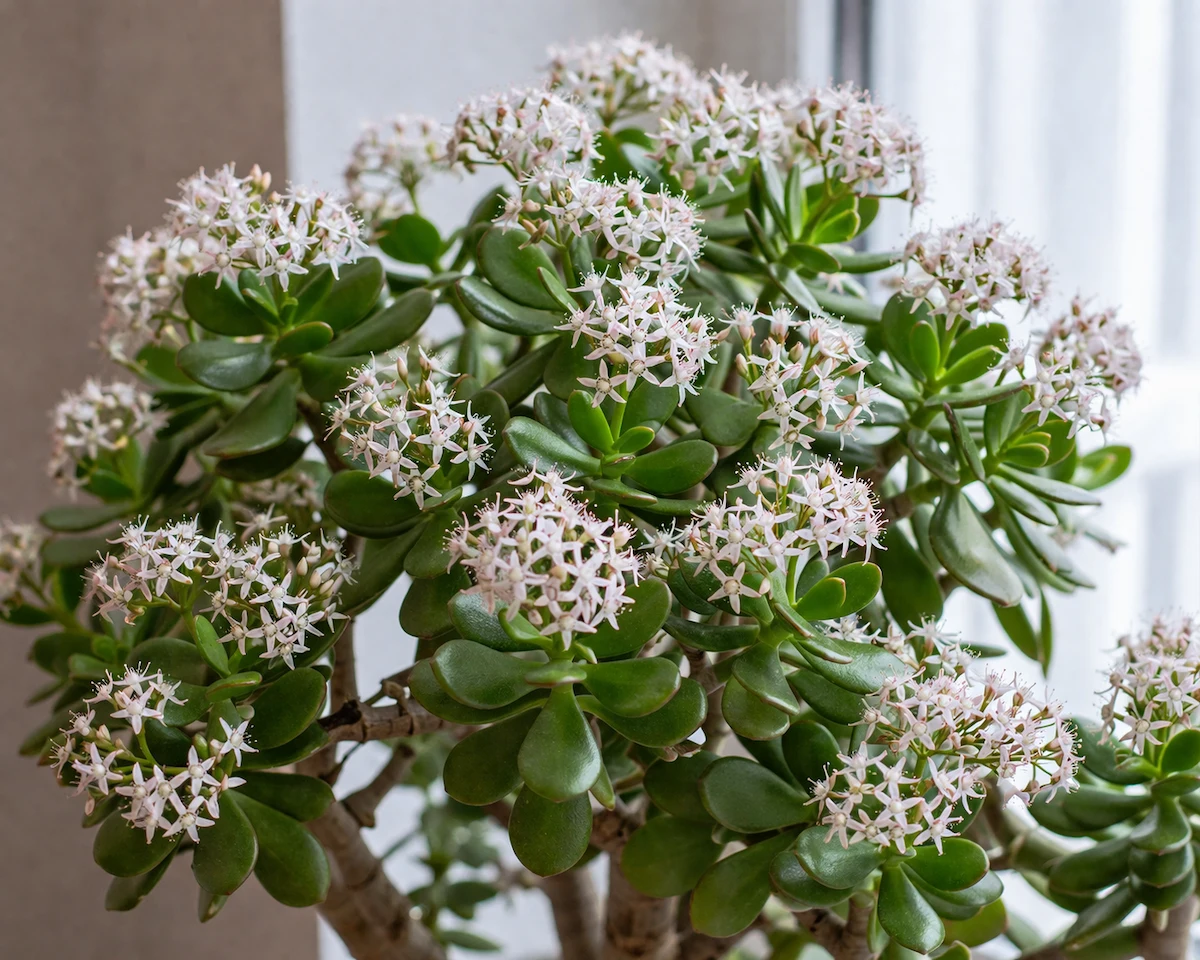
The flowers are small, star-shaped, white or pale pink, in smaller clusters at the tips of the branches. They appear in winter, typically from late December to February. The flower has a mild sweet scent, barely noticeable.
In most Serbian apartments, this is difficult to achieve because our apartments are too warm in winter, with central heating that runs non-stop. If you have a colder hallway, an uninsulated balcony, or a staircase that isn't heated, that's your chance for flowering.
Najčešći problemi i šta da uradite Common problems and what to do
Leaves soft and wrinkledThe plant is thirsty. Water it well from below and wait 24 hours. It almost always recovers.
The leaves fall off at the slightest touch.Overwatering. Urgently check the substrate, if it's wet and smells, remove the plant, shake off the roots, cut off rotten parts and repot into fresh, dry substrate. Do not water for 5 to 7 days afterwards.
The leaves are yellowing and falling off.is almost always a sign that root rot has set in. The procedure is the same as above.
Black spots on leavesFungal infection from too much moisture. Remove infected leaves, reduce watering, move to a brighter and more airy location.
White cottony traces in the axils of leaves or on the stemMealybug. Dip a cotton bud in 70%% alcohol, touch each mealybug cluster. After 7 days, check again and repeat as needed 2 to 3 times. If the infestation is severe, use a commercial insecticide for houseplants.
White spots or mould on the soil: a sign that the substrate has been too wet for too long. Remove the top layer of soil, reduce watering. If it recurs, the problem is with the substrate, more on causes and solutions in this article.
The plant has become leggy and lost its shape.Too little light. Move it closer to the window. The leggy branches won't recover, but you can prune them and make new plants from the cuttings.
Leaves scorched by the sun (brown dry tips)Too much direct sun after a long period in shade. Move it to a slightly more sheltered spot. The damaged leaves won't recover, but new ones that grow will be fine.
The tree is leaning to one sideThe plant grows towards the light. Turn the pot a quarter turn each week. If it's already leaning, you can prune the top off and let it regrow symmetrically.
Is jade plant poisonous to cats and dogs?
Yes. Jade plants are toxic to cats and dogs. The ASPCA list of poisonous plants for pets.
It contains substances that cause vomiting, diarrhoea, weakness, incoordination, and in rare cases, heart rhythm disturbances in animals that nibble the leaf.
If you have a cat that chews everything it sees, keep the jade plant on a high shelf in a room the cat doesn't enter, or consider another plant. Cats tend to nibble on succulents because their leaves are juicy and resemble certain types of food.
It is not dangerous to touch. The sap from the leaves can cause mild skin irritation in more sensitive people, so wear gloves when repotting if you have sensitive hands. Do not eat it, of course.
Three things to remember, if nothing else from this text. Lots of light, little water, free-draining substrate. If you respect this, your crassula will be with you for decades, and you will probably prune it somewhere along the way and make a second, third, fifth plant for friends.
If you're thinking of making the mixture yourself, you can order all the ingredients directly from us. We produce light acid peat and agro perlite In Sremska Mitrovica since 1999, and you can find sand in every building supply store. If you don't want to mix it, Cactus compost it's already balanced and covers everything Krasula needs.