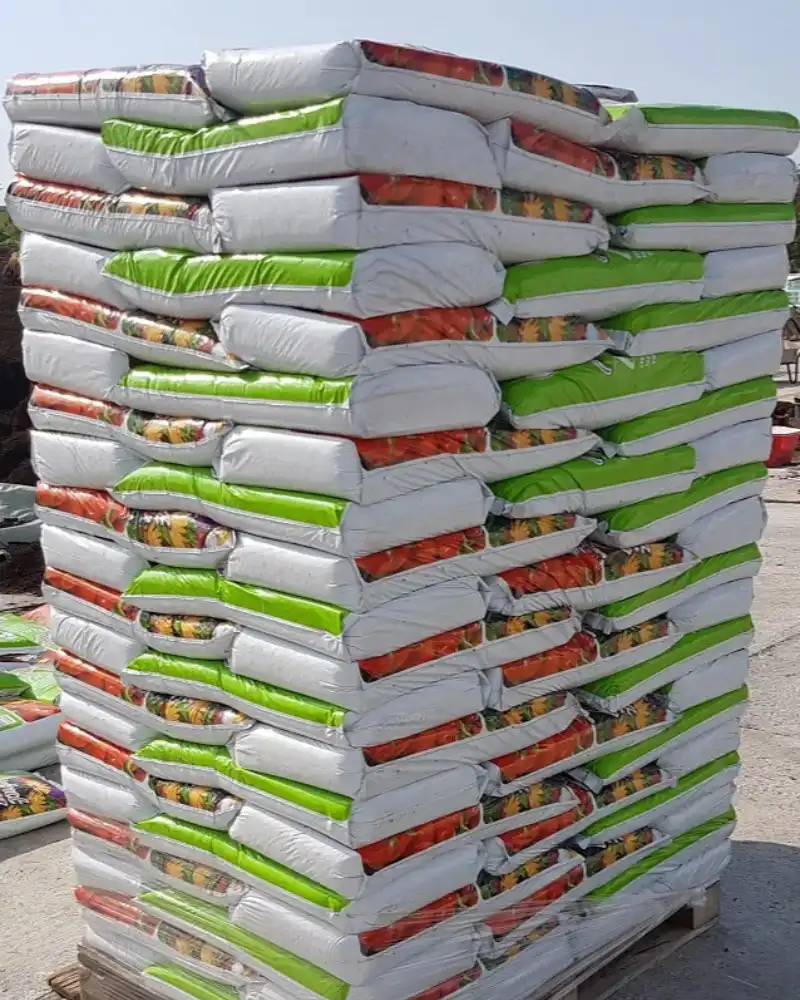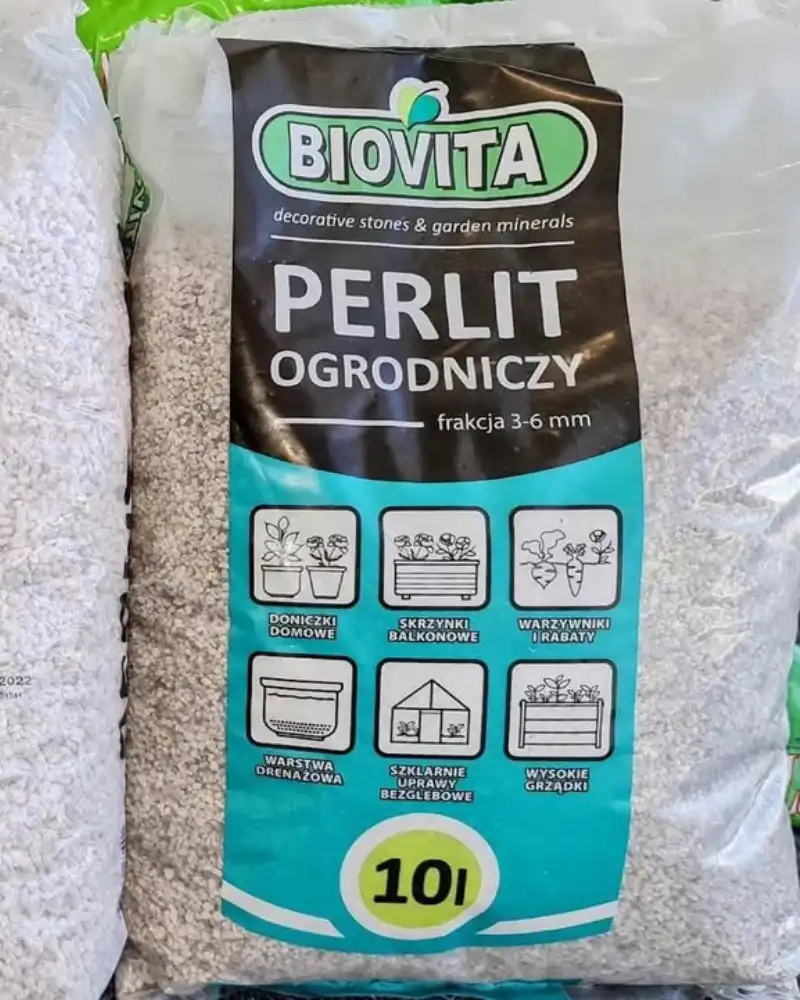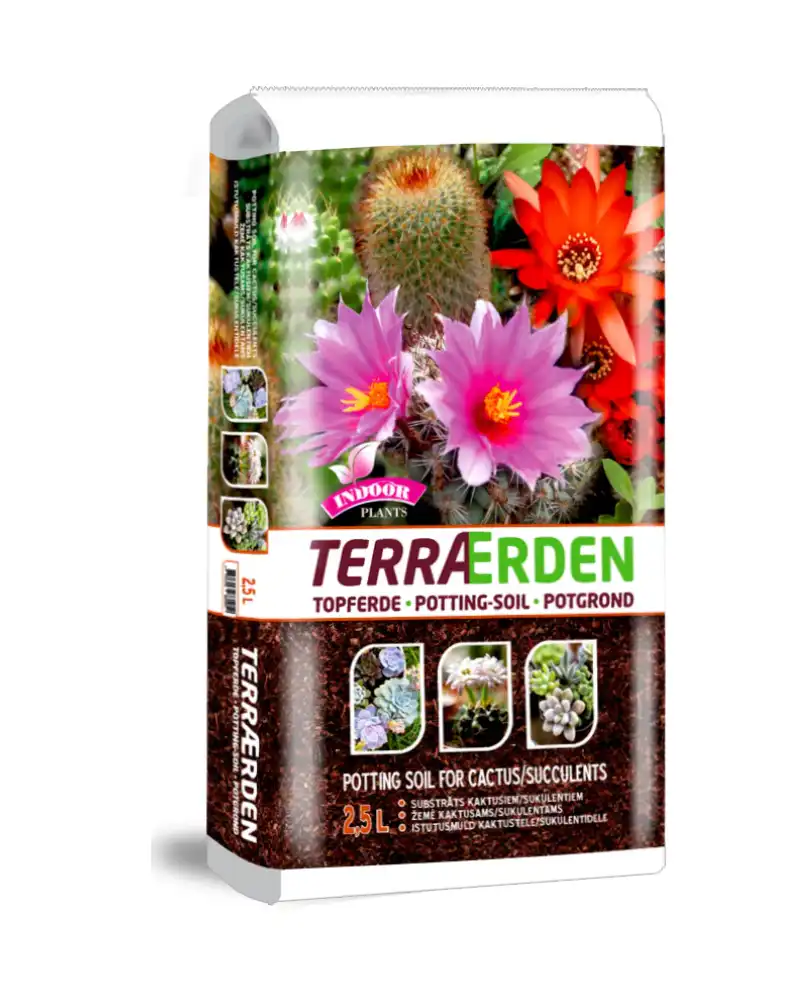



There is one plant that you can forget to water for three weeks, leave in a corner where the sun only says hello to it, and it will still look like you bought it yesterday., This is a zamia. If you've ever managed to kill a cactus (yes, that's possible too), this plant is your chance to redeem yourself.
The ZZ plant has become a favourite in recent years for both absolute beginners and people who simply don't have time for fuss with their houseplants. Its leaves are dark green and glossy, almost as if they've been waxed, and they grow in those distinctive upright stems that look tidy with no effort on your part.
In this guide, we'll go through everything you need to know about care: watering, light, the right soil for a ZZ plant, repotting, propagation in three ways, and troubleshooting when something goes wrong. Along the way, we'll also clear up a common naming confusion, as ZZ plants are mixed up with other plants more often than you might think.
What is a ZZ plant and why does it have so many names?
Its Latin name is Zamioculcas zamiifolia, a name few people manage to pronounce correctly on the first try. That's why in everyday conversation you'll hear it referred to by a multitude of nicknames: zamioculcas, ZZ plant (from the initials of its Latin name), Zu-Zu plant, the eternity plant, and even poetically as the Zanzibar Gem or Emerald Palm. These are all names for one and the same plant.
It belongs to the Araceae family, the same family as the Philodendron and Monstera, and it originates from East Africa. It grows in Kenya, Tanzania, Mozambique, and Zanzibar, in areas where rain can be absent for months. This is precisely why it is so resilient: it has learned to survive drought by storing water in underground rhizomes and fleshy leaf stalks. It only became popular as a houseplant from 1996, when Dutch growers began to propagate it more seriously for the market. In a flat, it typically grows between 40 and 90 cm.
Now a more important thing regarding the name. Zamia is not a money tree. The money tree is a folk name traditionally associated with the jade plant (Crassula ovata), a plant with small, round leaves resembling coins. If you are looking for care instructions for that specific plant, we have a separate text about it. Ladybirds and money trees. The ZZ plant is something else entirely, with elongated leaves and completely different needs.
Quick guide overview: Zamioculcas
Click on the tab to jump directly to the section you are interested in.
Lifespan
10+
year in the house
Height in the flat
40–90
centimetres
Temperature
18–26
°C ideally
Light
indirectly
puts on and half-shadow
Ideal conditions by room
Ideal
East or west window
Grow taller, strong shiny leaves
Good
South window with a curtain
Healthy plant, keep out of the midday sun
It's passing.
North window
Survive, but grow slower
Bad
Directly on the floor or in a dark corner
Burnt leaves or no growth
Temperature throughout the year
Lettuce (plant)
18–26°C
Winter (minimum)
above 15°C
Approximate watering schedule for a Serbian apartment
Jan
Over 30 days
February
Over 30 days
March
21–28 days
April
14–21 d
May
14 days
June
10–14 days
July
10–14 days
Average
10–14 days
September
14–21 d
October
21–28 days
New
28+ days
December
Over 30 days
Numbers are a guide, not a rule. Zamia stores water in its rhizomes and petioles (its leaf is about 91% water), so it's always better for it to be a little thirsty than to stand in dampness.
Test vodom: je li vrijeme za vodu?
Damp at 2–3 cm
Don't water. Wait a few more days and check again.
Dry to 2-3 cm
It's time. Water thoroughly until water runs through the drainage, then be sure to empty the excess from the saucer.
Zamioculcas Substrate Recipe
Potting compost for houseplants65%
The base of the mixture. It retains just enough moisture for the roots.
Perlite35%
These are beads that create air pockets and allow water to pass through quickly. This is what keeps rhizomes from rotting.
For a pot of about 16 cm, two handfuls of indoor plant substrate are sufficient for one handful of perlite. If you want even faster drainage, add a handful of coarse sand. Ordinary garden soil compacts and retains moisture, making it a poor choice for ZZ plants.
Flowerpot
Mandatory
Drainage holes at the bottom. Without them, even the best substrate won't help.
Size
Just a bit bigger than the root. An oversized pot means lots of damp soil around the rhizome.
Dividing rhizomes (fastest and most reliable)
The surest way, the new plant immediately has roots and a stem.
1
Remove the plant when transplanting
Best in spring, when you're repotting anyway.
2
Divide the rhizomes
With your hands or a clean knife, so that each piece has at least one stem and a piece of root.
3
Plant the parts in separate pots
Into fresh, loose substrate, and treat them as adult plants.
Stem cutting (produces more plants)
Slower than seeding, but you get several new plants from one.
1
Cut the healthy stem at the base
I clean it with a sharp knife or scissors.
2
Let the cut dry
Sit for two on the dry, to heal.
3
In water or light substrate
A small rhizome will form at the bottom within a few weeks to a couple of months. Don't panic if there's no progress in the first few days.
Slip (slowest, for the patient)
This new plant from a single leaf.
1
Tear off a healthy leaf with part of the stem
That very piece of the stem is important, the rhizome starts from it.
2
Press the leaf into the moist substrate.
Shallow, so that the bottom touches the earth.
3
Arm yourself with patience
A tiny rhizome may only appear after a few months, but once it gets going, you get a whole new ZZ plant.
Click on the symptom to see the cause and solution.
Cause: Natural shedding of old leaves.
Solution: Nothing, that's normal. Remove the yellowed leaf and let the plant do its thing.
Solution: Nothing, that's normal. Remove the yellowed leaf and let the plant do its thing.
Cause: Almost always too much water and the beginning of rhizome rot.
Solution: Immediately reduce watering and check the rhizomes. If they are soft, proceed with the rot treatment.
Solution: Immediately reduce watering and check the rhizomes. If they are soft, proceed with the rot treatment.
Cause: direct sunlight or dry air next to a radiator.
Solution: Move the plant away from strong light and heat sources. Damaged parts will not recover, but new leaves will be good.
Solution: Move the plant away from strong light and heat sources. Damaged parts will not recover, but new leaves will be good.
Cause: Overwatering. The most serious problem with snake plants.
Solution: Remove the plant, cut off all rot to healthy tissue, leave it to dry, and repot in fresh, dry substrate. Act quickly and the plant is often saved.
Solution: Remove the plant, cut off all rot to healthy tissue, leave it to dry, and repot in fresh, dry substrate. Act quickly and the plant is often saved.
Cause: Usually a dark or too cold place, not an illness.
Solution: Move it closer to the light (without direct sun) and be patient, ZZ plants are naturally slow growers.
Solution: Move it closer to the light (without direct sun) and be patient, ZZ plants are naturally slow growers.
Cause: either too long in completely dry soil, or, paradoxically, the rhizomes have rotted and cannot draw water.
Solution: Check the rhizomes. If they are firm, water and wait. If they are soft, proceed to the rot procedure.
Solution: Check the rhizomes. If they are firm, water and wait. If they are soft, proceed to the rot procedure.
Types of garages you can find in Serbia
Most people think there's only one Zamioculcas, the classic dark green one. In fact, there are several, and they are appearing more and more frequently in our nurseries and florists.
The Classic Zamioculcas is the one everyone knows: glossy dark green leaves, upright growth, and resistance to almost anything.
Raven, also known as the ZZ plant, is a real asset for lovers of a dramatic look. Its new leaves grow light green, darkening over time to an almost black colour.
Zenzi is shorter and more compact, with shorter stems and more densely arranged leaves. It's ideal for shelves and smaller spaces as it doesn't grow as tall as a classic plant.
Zamicro is a dwarf version, smaller in every respect. Its leaflets are smaller, the plant remains compact and looks good on a desk.
Lucky has more rounded and wider leaves, which give it a softer, bushier appearance.
Variegata is a colourful variety, with leaves streaked with white or cream. It's beautiful, but more demanding, as the white parts of the leaf don't have chlorophyll, so it needs more light.
Super Nova goes in the opposite direction to Raven: its leaves are even darker and larger, with a pronounced shine.
Chameleon is a newer variety where young leaves emerge yellowish-green, only later blending in with the rest of the plant.
If you're just starting out, Classic or Zenzi are the safest choices. Raven is worth considering when you want something a bit more striking, but keep in mind that rarer varieties are usually more expensive.
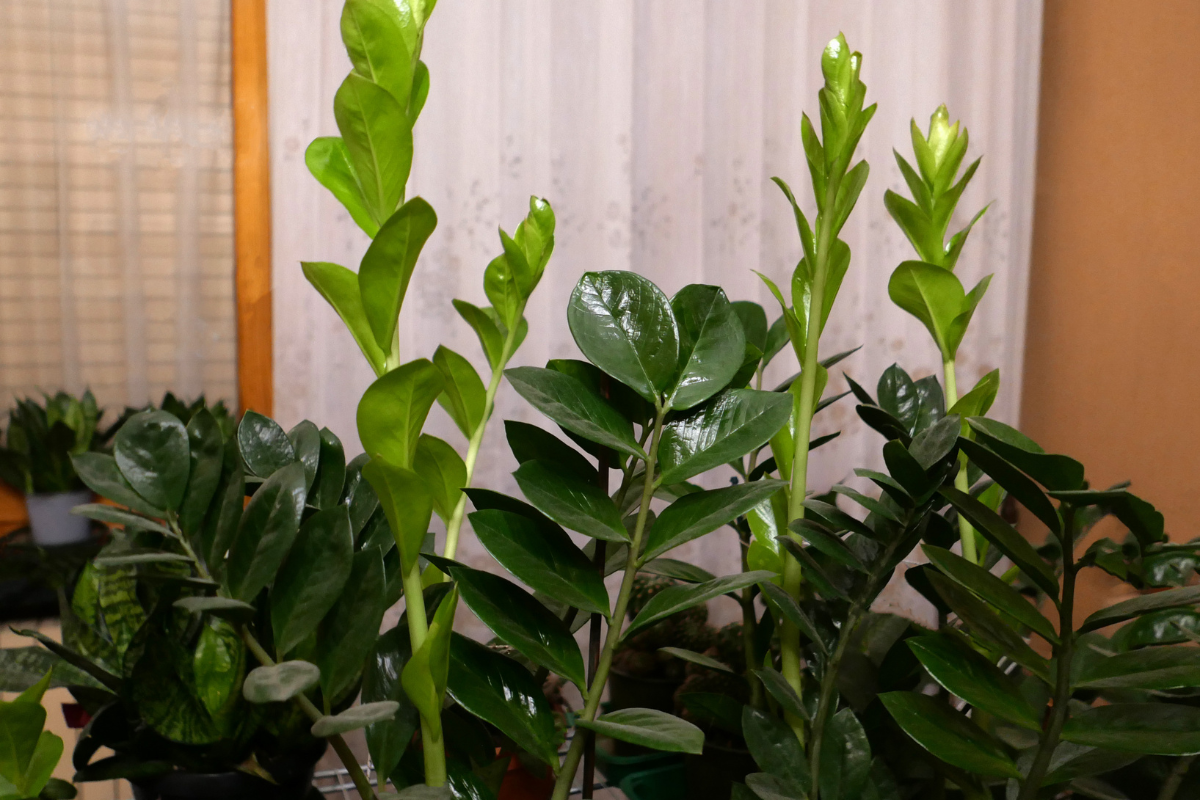
Watering palms: too much water does them more harm than too little
This is the point where most people go wrong, and with the best of intentions. The ZZ plant is a succulent, meaning it stores water in its rhizomes and stems. Its leaves are about 91% water, and its stems are even about 95% water. In other words, it always has a reserve.
The rule is simple: water only when the soil has dried out well. Stick your finger two to three centimetres into the substrate, and if it's dry, it's time. If there's even a hint of moisture, wait another day or two. In summer, this usually means once every two weeks, and in winter, once a month is quite enough.
When watering, water generously so that the water passes through the entire pot and drains out the bottom, and then be sure to empty any water that collects in the saucer. The Zamioculcas zamiifolia does not tolerate its roots standing in water. Rhizome rot, the most serious problem with this plant, almost always comes from overwatering, not from forgetting to water. If you are the type who likes to touch plants every day, the Zamioculcas zamiifolia will teach you patience. It is literally better to neglect it a little than to drown it with water.
Light, temperature and the right place in the flat
The ZZ plant has a reputation for being able to tolerate darker corners, and that's true, but there's a catch. It will survive in low light, but it won't grow. If you want it to thrive and produce new shoots, it needs light, just not direct sunlight.
The ideal spot is near a window on the east or west side, where it gets plenty of diffused light during the day. A south-facing window is acceptable if you move the plant a bit or use a curtain, as the strong midday sun can scorch its leaves. A north-facing window is also usable, the growth will just be slower.
Regarding temperature, zamija are happy with anything between 18 and 26 degrees, which is more or less normal room temperature. What they don't like is cold below 15 degrees and sudden changes, so keep them away from drafts and from windows that let in cold air in winter. Air conditioning blowing directly on them is also a bad idea.
Substrate for snakes: why ordinary garden soil isn't suitable?
Since the ZZ plant suffers most from excess water, it all starts with the substrate. It needs soil that drains water quickly and doesn't retain moisture around the roots. Ordinary garden soil is too heavy a choice because it compacts, stays wet for a long time, and practically invites rhizome rot.
The best solution is a loose, airy substrate. A good base is a quality Potting compost, Here's a simple recipe that works: two handfuls of houseplant compost to one handful perlite. Perlite breaks up the soil, creates air pockets and helps water drain quickly.
If you want to delve deeper into the story of why substrate structure is important and how pH affects plant health, we have a detailed A guide to pH and substrate structure. For ferns, it is enough to remember one thing: the more aerated the soil, the happier the plant.
Transplanting sage: how, when and how often?
The good news is that snake plants don't like frequent repotting and are quite comfortable when their pot is a little snug. Repot every two to three years, or when you notice the rhizomes starting to push against the sides of the pot and roots emerging from the drainage holes.
The best time is spring, when the plant begins active growth. Choose a pot that is only slightly larger than the previous one, one or two sizes bigger, no more. An oversized pot means a lot of soil that stays moist for a long time, and you already know that's not good. Pots for Zamioculcas can be either plastic or ceramic, just be sure they have drainage holes at the bottom.
When repotting, remove the plant, gently shake off the old soil from the rhizome, and check for any rotten, soft parts. If you find any, cut them off with a clean knife. Place the plant in a new pot, fill with fresh substrate, and water moderately. If you're unsure how much soil you need for a specific pot size, our text on that subject will help. How much substrate goes to which plant.
Breeding Hamsters: 3 Ways, Step-by-Step
Breeding ginger is a project for the patient, as this plant does nothing in a hurry. But it is feasible, and in three ways.
Dividing the rhizome is the quickest and most reliable method. When transplanting, remove the plant and carefully separate the rhizomes by hand, or cut them with a clean knife so that each part has at least one stem and a piece of root. Plant each part in a separate pot and treat it as an adult plant. This is the safest way and the new plant immediately has a head.
Stem cuttings take longer but yield more new plants. Cut a healthy stem at the bottom and leave it for an hour or two to allow the cut to dry. Then place it in a glass of water or directly into a light substrate. In water, you will see a small rhizome forming at the bottom within a couple of weeks to a couple of months. Zamioculcas cuttings can be slow, so don't panic if nothing happens in the first week.
This method is the slowest and requires the most faith in the process. Tear off a healthy leaf along with a small part of its stem and press it into damp substrate. It can take months before a tiny rhizome appears, but once it starts, you'll get a brand new plant from a single leaf.
Regardless of the method, keep new plants in a warm, well-lit spot away from direct sunlight, and be cautious with watering until they are established.
Savings
The Zamioculcas is not fussy about fertiliser and a little is enough for it. During spring and summer, while it is actively growing, feed it with liquid houseplant fertiliser once a month, at half the concentration recommended on the packaging. Stop completely in winter, as the plant is dormant then and does not consume food.
Too much fertiliser does it more harm than good. If you notice brown edges on the leaves or a white crust on the soil surface, it's a sign you've overdone it, so take a break and water it thoroughly with clean water to wash away the excess.
Common problems and how to solve them
Most problems with snake plants boil down to one word: water. But let's break it down by symptoms, as the same issue can have different causes.
Yellow leaves are the most common complaint, and with them, the key is where the yellowing occurs. If the ZZ plant has yellow leaves at the bottom, on older stems, it's usually a natural shedding of old leaves and there's no need to worry. But if young leaves at the top are yellowing, or the entire shoot is losing colour at once, it almost always means overwatering and the beginning of rhizome rot. In this case, reduce watering immediately and check the roots.
Brown spots and scorched tips usually come from direct sunlight or dry air next to radiators. Move the plant away from bright light and heat sources.
Rhizome rot is the most serious problem and smells exactly as it sounds. If the rhizomes are soft, dark and smelly, remove the plant, cut away all rot down to healthy tissue, allow it to dry out and repot in fresh, dry substrate. A diseased zamia can often be saved just like this, but only if you act in time.
Leggy growth isn't usually a disease, but a sign that the plant is getting too little light or is too cold. Move it closer to a light source and be patient.
Drying out the whole plant is rarer, but it happens if it has been in completely dry soil for too long or, paradoxically, if its rhizomes have rotted meaning they can no longer draw up water.
Does the oak tree bloom in the flat?
It blooms, but rarely, and that flower likely won't knock your socks off. The Zamioculcas flower looks like a small, unremarkable, lighter-coloured spike, hidden low among the stems near the ground. It resembles a small corncob wrapped in a greenish spathe, which is typical for plants in the Araceae family.
This happens very rarely in a pot and only with mature, content plants that have enough light. If your ZZ plant flowers, it's actually a sign that you're doing everything right. You don't need to do anything special: feel free to let the flower do its thing, or cut it off if it bothers you, as it's not a decorative part of the plant anyway. The beauty of the ZZ plant is in its leaves, not its flower.
Is the ZZ plant poisonous?
The question that bothers everyone who has children or pets. Is the ZZ plant poisonous? Yes, mildly. In its leaves and stems, it contains calcium oxalate crystals, the same ones found in many houseplants such as Dieffenbachia and Philodendron.
In practice, this means that the ZZ plant is not deadly, but chewing the leaves can cause burning and irritation in the mouth, throat, and digestive tract, while the sap from the plant can irritate the skin of sensitive individuals. Therefore, it's a good idea to wash your hands after repotting or pruning, and to keep the plant out of reach of small children and curious cats and dogs. If someone swallows part of the plant and experiences a severe reaction, contact a doctor or veterinarian. In most cases, everything ends with mild discomfort, but caution does no harm.
Where to buy a guinea pig and how much does it cost?
Today you can find ZZ plants in almost every better florist, garden centre, and nursery, and increasingly in supermarkets with houseplants. The price depends on the size and variety. Smaller, young plants are in the lower price range, while larger, branched specimens and rare varieties like Raven or Variegata cost significantly more.
When choosing a plant, look for one with firm, upright stems and glossy leaves, without any yellow or soft spots. A healthy zamioculcas will appear tense and erect, rather than drooping.
Frequently asked questions about the ZZ plant
How often should a ZZ plant be watered? In summer, water approximately once every two weeks, and in winter, once a month, but always only when the soil has completely dried out. It's better to water less often than too often.
If the lower, older leaves are yellowing, it's normal ageing. If the young leaves at the top are yellowing, it's most likely due to too much water, so reduce watering and check the rhizomes.
Can a Zamioculcas plant live without sun? It can survive in low light, but it won't grow. For a beautiful and lush appearance, it needs a bright spot, just without direct sunlight.
To speed up the growth of your ZZ plant, give it more indirect light, fertilise it during spring and summer, and keep it at a warm room temperature. ZZ plants are naturally slow-growing and won't grow like a vine, but light helps the most.
Is the ZZ plant safe for cats and dogs? It is mildly toxic due to calcium oxalates, so it's best to keep it out of reach of pets. It's not deadly, but chewing will cause discomfort.
How long does a zamioculcas live? With decent care, it can easily live for more than ten years. It is known for its longevity, which is why it is also called the plant of eternity.
The ZZ plant is a forgiving plant
If you were to remember only one thing from all this text, let it be this: the ZZ plant tolerates your forgetfulness much better than your over-caring. Don't overwater it, give it decent light and a loose substrate, and it will reward you with years of beautiful, shiny leaves with minimal effort. That's why it's perfect for beginners, for busy people, and for anyone who has already given up on houseplants.
And since everything starts from the soil, if you want to give your chameleon the best start, check out our Potting compost And add a little perlite to it for perfect drainage. This is the simplest thing you can do to keep your plant healthy for years.